

Pinetree Paradise
Vale Do Lobo, Portugal 2024
SCOPES
Transformation of a private residence · International project
Interior Architecture · Spatial Planning · Material Concept · Bespoke Design · Technical Planning · Procurement & Logistics Coordination · Local Trade Coordination · International Project Management · Implementation Oversight
STORY
Surrounded by pine trees and shaped by the light of the Atlantic coast, this residence in Vale do Lobo offered a setting in which architecture, landscape and the Portuguese way of life could become closely intertwined.
Rather than imposing an aesthetic imported from elsewhere, the design developed from the character of the place itself. Portuguese materials, local traditions and the colours and textures of the surrounding landscape became the starting point for an interior that feels contemporary while remaining deeply connected to its setting.
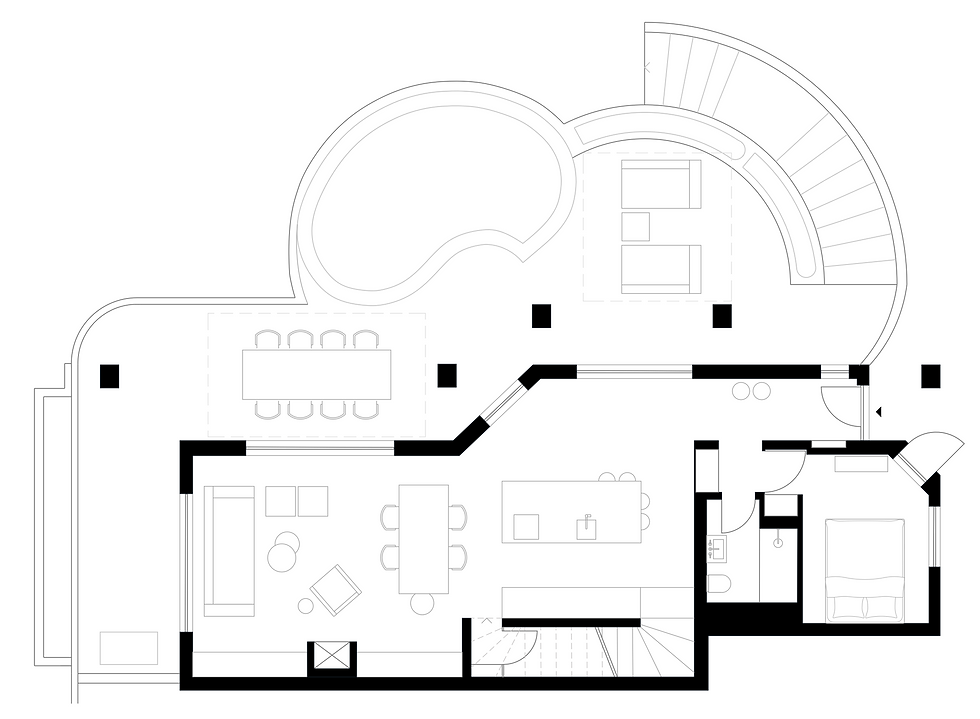
The existing layout, however, did not fully exploit the potential of the house. By relocating the kitchen and reorganising the spatial structure, we created a more natural relationship between cooking, dining and living, while strengthening the connection between interior and exterior spaces. The new configuration also made it possible to introduce a fourth bedroom and a third bathroom, adding both flexibility and long-term value to the property.
Natural materials and bespoke elements establish a quiet continuity throughout the house. Wherever possible, materials and products were sourced locally. Where the required quality or specification was not available in Portugal, we drew on our established network of partners. The flooring, for example, was sourced externally and supplied specifically for the project.
Realising the design from a distance required an equally considered approach to procurement and logistics. Furnishings and interior elements sourced in Germany were consolidated before being transported to Portugal, allowing deliveries to be coordinated as one efficient process rather than as a sequence of individual shipments. Materials and products sourced locally were organised in parallel and scheduled to arrive when required by the progress on site.
This became an essential part of the project. When working internationally, successful implementation depends not only on what is designed, but on ensuring that the right materials, products and people come together at the right moment.
At the beginning of construction, we were also working with a local contractor we had not collaborated with before. Establishing a shared understanding of the design intent, detailing and expected level of execution therefore became fundamental to the process.
Working closely with the Portuguese construction team, we translated the technical planning and quality requirements into solutions that could be successfully implemented within the local building context. The openness and commitment of the craftsmen on site made this a genuinely collaborative process.
Communication itself became part of the coordination. Several languages were spoken on site, while drawings, details and continuously updated decisions provided a common reference point across different professional and cultural backgrounds. From a distance, clear information, reliable communication and precisely timed decisions were essential to keeping construction, procurement and installation aligned.
The result is a house that belongs unmistakably to its location while achieving the level of detail and execution envisioned from the beginning.
Pinetree Paradise demonstrates that working internationally is not about transferring one way of building to another country. It is about understanding the place, drawing on local expertise and complementing it where necessary with an established network of specialists, suppliers and partners — while creating a process capable of bringing everything together.


